How Continuing Competency Affects the Modern Plumber in Hawaii
Plumbing in Hawaii has never been a casual trade, and that is exactly the point. The state treats it as licensed work for a reason. A person may not act or hold themselves out as a plumber without a license, and plumbing work generally must be performed by a licensed journey worker plumber or master plumber. Apprentices and helpers can be part of the job, but they work under supervision. That framework shapes the daily reality of the trade, from who can legally take the call to how a company staffs a project and how a customer evaluates the person standing at the front door.
Continuing competency sits right in the middle of that framework. It is not just a renewal box to check. In Hawaii, plumber license renewals for the current cycle ending June 30, 2027 require continuing competency in the 2021 Uniform Plumbing Code. For working plumbers, that requirement has practical consequences. It affects how they estimate work, how they train crews, how they communicate with inspectors, how they protect customers, and how they compete in a market where homeowners often start with a quick search for a “plumber near me” and make a fast decision.
For a modern plumber in Hawaii, especially one serving active residential and commercial markets such as West Hawaii, continuing competency is not abstract. It directly influences credibility, risk, workflow, and long-term business stability.
Licensing already sets the baseline, continuing competency raises the standard
A license tells the public that the trade is regulated. Continuing competency tells the public that regulation is active rather than frozen in time.
That distinction matters more than many people realize. Plumbing is not a trade where yesterday’s understanding is always good enough for today’s work. Even without getting into technical details beyond the verified public requirements, anyone who has worked around plumbing long enough understands how much depends on code knowledge being current. Water supply systems, drain lines, fixtures, heaters, supervision requirements, and scope boundaries all sit within a legal and safety framework. If a plumber is renewing a Hawaii license under a cycle that requires competency in the 2021 Uniform Plumbing Code, that requirement reinforces a basic professional expectation: you are not only experienced, you are current.
For the modern plumber, current knowledge changes the tone of the whole job. It sharpens judgment before work begins. It helps avoid the costly habit of relying on memory from years ago. It also helps when the customer asks a common question that sounds simple but carries legal consequences: “Can you just have your helper handle it?” In Hawaii, that answer cannot be improvised. The trade has defined licensing and supervision rules, and continuing competency helps keep those lines clear in practice.
A strong plumber does not just know how to turn a wrench or sweat a joint. A strong plumber knows what work must be handled by a licensed journey worker or master plumber, what can be done under supervision, and what cannot be treated casually.
Why this lands differently in Hawaii
Hawaii’s market gives continuing competency extra weight because the legal boundaries are not loose. The state does allow a narrow exception for limited emergency plumbing repair work in a person’s principal residence, but that exception does not extend to sewer lines, drains, gas lines, or certain fixtures such as heaters and water closets. That means some of the most urgent or expensive calls people associate with an emergency plumber remain outside the do-it-yourself gray area.
This has two immediate effects on the trade.
First, it places licensed plumbers at the center of many high-consequence problems. A backed-up line, a failed heater, or a sewer issue is not the sort of situation where a homeowner can safely assume a broad emergency exception covers the work. Second, it puts a premium on plumbers who can explain those limits clearly without sounding evasive or self-serving.
That communication piece is underrated. When a customer is stressed, especially during a leak or loss of hot water, they do not want a legal lecture. They want someone who can say, calmly and confidently, what the law allows, what the work requires, and why the right path matters. Continuing competency supports that kind of professionalism because it keeps the licensed plumber anchored in current requirements rather than half-remembered rules.
For a plumber Kona residents or property managers call repeatedly, that matters. Trust is built less by slogans than by consistent, accurate guidance.
It changes how plumbers handle emergency work
Emergency plumbing is where continuing competency becomes visible fast. In the field, urgency can blur judgment. Customers want https://lukasvgbx235.valiantfield.com/posts/sewer-line-repair-why-this-is-not-a-simple-diy-job-in-hawaii the problem solved immediately. Crew schedules are tight. Access may be difficult. Sometimes the pressure to “just get it done” is intense.
That is exactly where current code knowledge and a clear understanding of legal scope become valuable. An emergency plumber in Hawaii is not just responding to water on the floor or a failed fixture. That plumber is also making decisions within a regulated trade environment. If the issue involves something excluded from the limited homeowner emergency exception, the licensed professional becomes even more central to getting the work handled properly.
Take a common real-world category like water heater repair. Hot water loss feels urgent to a household or a business, and customers often think of it as straightforward replacement work. But in Hawaii, the legal exception for emergency plumbing repairs in a principal residence does not apply to certain fixtures such as heaters. That alone raises the importance of using a properly licensed plumber rather than assuming any handy person can step in.
The same practical reality applies to drain cleaning and sewer line repair. Customers often see these as routine service calls. Legally and professionally, they are not something to treat casually. The homeowner emergency exception does not cover sewer lines or drains. A plumber who stays current through continuing competency is more likely to approach those calls with the right discipline from the start, which protects both the customer and the business.
The impact on everyday residential service
Most residential customers are not thinking about continuing competency when they pick up the phone. They are thinking about the leak under the sink, the clogged line, the water heater that stopped producing hot water, or the contractor they found by searching “plumber near me.” Yet continuing competency still shapes the service they receive.

It affects how the plumber diagnoses the issue, whether the plumber recognizes when the scope falls clearly within licensed work, and how confidently the plumber explains why certain tasks cannot be handed off inappropriately. It also affects staffing. In Hawaii, contractor oversight ties back to state licensing, and electrical and plumbing contractors must employ licensed electricians or plumbers to perform the actual work. That matters to the customer even if the customer never reads a statute. It changes who is qualified to perform the work in the home.
A homeowner often assumes the company name on the truck is all that matters. In practice, the qualifications of the person actually performing the work matter just as much. Continuing competency supports that chain of accountability. It reinforces that plumbing service is not just about dispatch efficiency, it is about making sure the licensed trade professional doing the work remains competent under the current code cycle.
This becomes especially relevant with services people often request by name, such as water heater repair or solar water heater repair. In parts of Hawaii where solar water heating is part of the residential conversation, customers may think of it as a niche mechanical issue. From the plumber’s side, it is part of a licensed profession operating under current competency requirements. That does not make every call more dramatic, but it does make professionalism less optional.
Commercial work feels the pressure even more
Continuing competency may be most visible in commercial settings, where the stakes are broader and the chain of responsibility is longer. Commercial projects involve owners, managers, tenants, contractors, and scheduling pressures that can expose weak trade discipline very quickly.
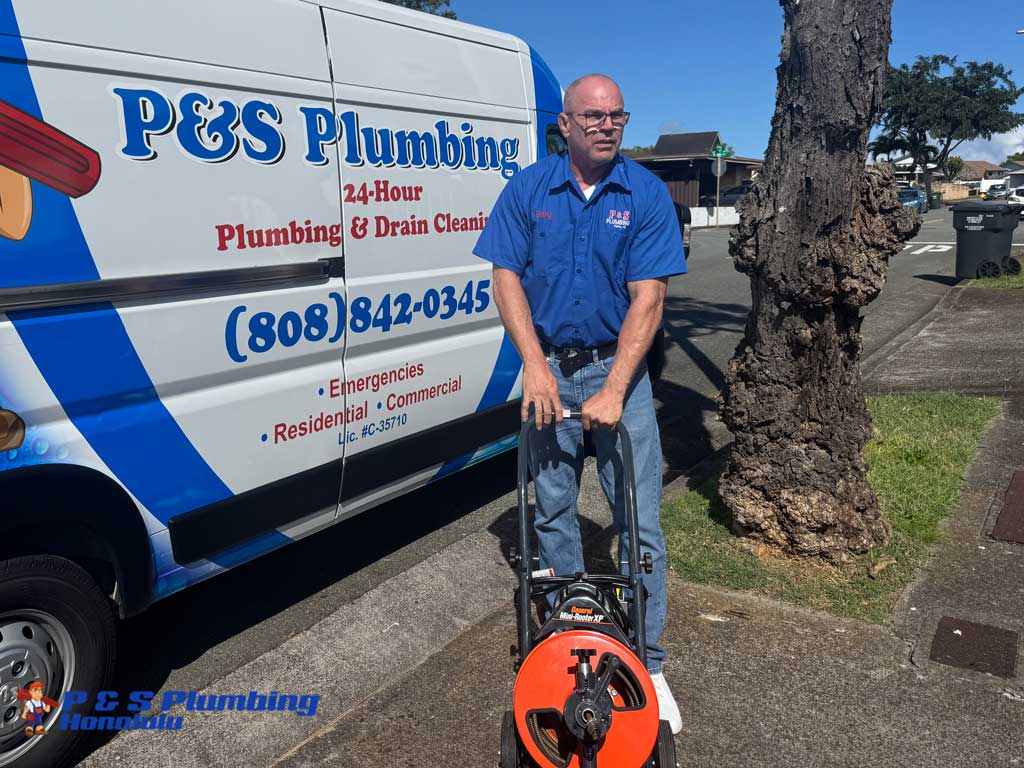
A commercial plumber has to think beyond a single service ticket. The work may affect occupancy, tenant operations, maintenance planning, or coordination with other licensed trades. Hawaii’s regulatory structure matters here because plumbing contractors must employ licensed plumbers to perform the actual work, and certain wastewater-related property projects may also require a licensed plumber and or electrician depending on scope. Even in a short planning meeting, that reality influences who must be present, who can sign off on work, and who can actually execute field tasks.
For commercial plumbing installation, continuing competency is not a decorative credential. It supports planning accuracy and helps reduce the risk of avoidable compliance problems. When jobs involve coordination, handoffs, or timeline pressure, the crew benefits from a licensed plumber who is current rather than merely experienced. There is a difference.
Experience tells you what usually works. Current competency helps confirm what is acceptable now.
That difference matters to businesses that cannot afford rework. A restaurant, retail site, office, or multi-unit property may absorb many ordinary delays, but plumbing mistakes can trigger shutdowns, tenant complaints, and expensive return visits. A commercial plumber who treats continuing competency seriously is more likely to protect the client from those downstream costs.
It changes hiring, training, and crew structure
From the company side, continuing competency affects much more than renewals. It influences how owners hire, how they assign work, and how they train support staff.
Because Hawaii requires licensed plumbers for the actual performance of plumbing work, and because apprentices and helpers work under supervision, a company cannot build itself around vague role definitions. It needs clarity. Who is licensed? Who is supervised? Who is authorized to perform the work? Who can lead the call? Continuing competency reinforces those distinctions because it keeps licensed personnel actively engaged with the governing code cycle rather than drifting into outdated habits.
That has practical effects inside a shop. Owners may need to plan more carefully around staffing depth. Senior plumbers may carry additional responsibility in reviewing work or mentoring newer team members. Dispatchers may need better judgment about which calls require a licensed journey worker or master plumber on site from the outset.
In healthy companies, continuing competency often improves training culture. The best shops do not treat code updates as a one-day inconvenience. They use them to tighten field standards and sharpen communication. The benefit is not only compliance. It is consistency. Customers notice when one technician says one thing and another says something completely different. Current competency reduces that gap.
Customers may not ask about code, but they feel the difference
Most customers will never say, “Tell me about your continuing competency in the 2021 Uniform Plumbing Code.” They will, however, notice the outcomes that competency shapes.
They notice whether the person at the property can answer questions directly. They notice whether explanations are calm and precise. They notice whether a company sends the right level of licensed professional for drain cleaning, sewer line repair, or water heater repair instead of creating confusion on site. They notice whether the estimate and the field decision line up.
In service businesses, professionalism often shows up in small moments. A customer asks if a helper can finish the work after the licensed plumber leaves. A property manager asks whether a wastewater-related improvement may require licensed trade involvement. A commercial client wants to know who exactly will perform the installation. Continuing competency does not guarantee perfect service, but it gives the plumber a stronger base for answering correctly and acting consistently.
Here is where a modern marketing problem meets a legal one. Many customers choose providers from a quick online search, maybe “plumber near me” or “plumber Kona.” Search visibility can get the phone to ring, but it cannot keep a company credible once questions start. Continuing competency helps turn a search result into a trustworthy service relationship because it supports the substance behind the branding.

Where continuing competency pays off in practice
The benefits are rarely flashy. They show up as fewer bad assumptions, fewer scope mistakes, and smoother job execution.
- clearer judgment about what work requires licensed plumbing performance
- stronger communication with homeowners during urgent repair calls
- better coordination on commercial plumbing installation and related project scopes
- improved supervision of apprentices and helpers
- more defensible decisions when code questions arise
None of those items sound glamorous, but anyone who has worked in the trades knows how much trouble starts when they are missing.
A missed scope issue on a sewer line repair can become a serious legal and financial headache. Unclear staffing on a commercial plumber job can create delays that frustrate everyone involved. Weak communication during an emergency plumber call can turn a manageable situation into a dispute. Continuing competency does not remove all pressure, but it reduces preventable mistakes.
The trade-off nobody likes talking about
There is a cost to staying current. Time spent on continuing competency is time not spent billing, scheduling, or catching up on backlog. Small operations feel that pressure more than large ones. A single licensed plumber carrying a heavy service load may see renewal-related education as one more demand on an already crowded calendar.
That frustration is understandable, but it misses the broader economics. The cost of staying current is usually smaller than the cost of getting scope, staffing, or compliance wrong. In a regulated trade, ignorance is not a savings strategy. It is deferred risk.
There is also a competitive trade-off. Companies that invest in current competency may seem slower or stricter than competitors who promise anything on the phone. Short term, that can cost a few rushed jobs. Long term, it tends to build a more stable business. Customers eventually learn which companies send qualified people, explain the work honestly, and handle complex service categories such as drain cleaning, sewer line repair, water heater repair, and solar water heater repair with proper discipline.
What property owners should listen for
Customers do not need to become code experts, but they should pay attention to how a plumbing company talks about licensed work in Hawaii. The right signals are usually simple.
- the company is clear that plumbing is licensed work in Hawaii
- it does not blur who will actually perform the job
- it speaks carefully about emergency exceptions instead of using them as a sales shortcut
- it understands that not all urgent work falls under a homeowner repair exception
- it can discuss residential and commercial scopes without guesswork
A company that handles those conversations well is often a company that takes continuing competency seriously, even if it never says so directly.
The modern Hawaii plumber is expected to do more than fix pipes
The image of the plumber as a purely hands-on mechanic is outdated. In Hawaii, the modern plumber works inside a framework of licensing, supervision, contractor oversight, and current code competency. That reality affects residential service calls, emergency response, and commercial project work alike.
For the working professional, continuing competency is part of remaining credible. It helps the journey worker or master plumber stay aligned with the current renewal cycle. It supports better supervision of apprentices and helpers. It strengthens communication with customers who may have found the company through a search for a plumber near me but still need the confidence that the work is being handled lawfully and professionally.
For the public, the effect is quieter but just as important. A competent, current plumber is better positioned to make sound decisions when the call involves a failed heater, drain cleaning, sewer line repair, or commercial plumbing installation. In a state where plumbing is clearly regulated and where some emergency exceptions are narrower than people assume, that competence matters.
A modern plumber in Hawaii is not measured only by speed or by tool skill. The real measure is whether that plumber can operate confidently within the law, under current code expectations, and with the judgment to know when a job is routine, when it is restricted, and when it demands the full weight of licensed professional responsibility. Continuing competency helps make that standard real.
Name: P&S Plumbing Kona
Address: 73-5573 Kauhola St Bay #11, Kailua-Kona, HI 96740, United States
Phone: 808-325-3892
Website: https://www.psplumbinghawaii.com/
Email: [email protected]
Hours:
Sunday: Open 24 hours
Monday: Open 24 hours
Tuesday: Open 24 hours
Wednesday: Open 24 hours
Thursday: Open 24 hours
Friday: Open 24 hours
Saturday: Open 24 hours
Time zone: Hawaii-Aleutian Time
Open-location code / Plus code: MXQJ+P4 Kailua-Kona, Hawaii, USA
Map/listing URL: https://www.google.com/maps/search/?api=1&query=Google&query_place_id=ChIJwc_thcwNVHkRhwCIvILuP8w
Embed iframe:
Socials:
https://www.facebook.com/psplumbingkona/
https://x.com/PSPlumbingKona
https://soundcloud.com/p-s-plumbing-kona
https://www.youtube.com/@PSPlumbingKonaHawaii
P&S Plumbing Kona provides plumbing services from its Big Island headquarters on Kauhola Street in Kailua-Kona.
The official website lists Kona phone service at 808-325-3892 and also lists Hilo and Honolulu service contacts.
P&S Plumbing provides residential plumbing, commercial plumbing, drain and sewer service, water heater work, plumbing repairs, leak detection, fixture repair, kitchen plumbing, bathroom plumbing, and emergency plumbing support.
The official site lists the Big Island headquarters at 73-5573 Kauhola Street, Bay 11, Kailua Kona, HI 96740.
The company’s official site lists Hawaii State License Number CT-35710 and describes P&S Plumbing as licensed and insured.
Customers can contact P&S Plumbing Kona for drain cleaning, sewer-line concerns, water heater service, clogged toilets, fixture repairs, plumbing leak detection, pipe-lining needs, bathroom remodeling plumbing, kitchen plumbing, commercial plumbing, and urgent plumbing requests.
For plumbing service in Kailua-Kona and West Hawaii, call 808-325-3892 or visit https://www.psplumbinghawaii.com/
The public map listing uses plus code MXQJ+P4 Kailua-Kona, Hawaii, USA and can help customers find P&S Plumbing Kona near Kauhola Street.
Popular Questions About P&S Plumbing Kona
What does P&S Plumbing Kona provide?
P&S Plumbing Kona provides plumbing services for residential and commercial customers, including drain cleaning, sewer and drain service, water heater service, plumbing repairs, fixture repair and installation, leak detection, kitchen plumbing, bathroom plumbing, and 24-hour emergency plumbing.
Where is P&S Plumbing Kona located?
The official contact page lists the Kona location at 73-5573 Kauhola Street, Bay 11, Kailua Kona, HI 96740. The listing address is 73-5573 Kauhola St Bay #11, Kailua-Kona, HI 96740, United States.
What phone number should Kona customers call?
The official website lists Kona phone number 808-325-3892.
What is the email address for P&S Plumbing Kona?
The email address is [email protected].
What are P&S Plumbing Kona’s hours?
The listing hours show P&S Plumbing Kona as open 24 hours a day, seven days a week, Hawaii-Aleutian Time. The official website also references 24-hour emergency plumbing service.
Is P&S Plumbing licensed?
The official website lists Hawaii State License Number CT-35710. Customers can confirm license status directly with the relevant Hawaii licensing authority before hiring.
Does P&S Plumbing Kona offer emergency plumbing?
Yes. The official website references 24-hour emergency plumbing service and emergency services availability.
Does P&S Plumbing handle water heaters?
Yes. The official website lists water heater installation and repair, including tankless, solar, conventional water heaters, and boiler setup and repair.
What areas does P&S Plumbing serve from Kona?
The official service-area page lists Big Island / Kona communities including Kona, Holualoa, Kukio, Waikoloa Village, Kalaoa, Captain Cook, Kahaluu-Keauhou, Keauhou, Kainaliu, Waimea, Puako, and Kealakekua.
How do I contact P&S Plumbing Kona?
Call 808-325-3892 or visit https://www.psplumbinghawaii.com/. Social profiles: Facebook, X, SoundCloud, and YouTube.
Landmarks Near Kailua-Kona, HI
Kauhola Street: The street listed for P&S Plumbing Kona’s Big Island headquarters and a practical reference point for the Kailua-Kona location.
Queen Kaʻahumanu Highway: A major West Hawaii route connecting Kailua-Kona, Kona International Airport, Waikoloa, and nearby coastal communities.
Ellison Onizuka Kona International Airport: A major transportation landmark north of Kailua-Kona and near local service routes.
Kailua-Kona town: A central West Hawaii community served by local plumbing contractors.
Old Kona Airport State Recreation Area: A well-known Kailua-Kona landmark near residential and commercial areas.
Kailua Pier: A central waterfront landmark in Kailua-Kona and a common local reference point.
Aliʻi Drive: A major coastal route with homes, condos, restaurants, shops, and visitor properties.
Honokōhau Harbor: A marina and commercial harbor area near Kailua-Kona and local business routes.
Kaloko-Honokōhau National Historical Park: A major cultural and coastal landmark north of Kailua-Kona.
Keauhou: A South Kona community with homes, condos, resorts, and plumbing service needs.
Holualoa: An upland Kona community with residential properties and local businesses.
Waikoloa Village: A West Hawaii community listed on P&S Plumbing’s service-area page.
Waimea: A Big Island community listed on P&S Plumbing’s service-area page.
Kealakekua: A South Kona community listed on P&S Plumbing’s service-area page.
Captain Cook: A South Kona community listed within P&S Plumbing’s Big Island / Kona service-area references.
For residential plumbing, commercial plumbing, drain cleaning, sewer-line repair, water heater service, leak detection, fixture work, bathroom plumbing, kitchen plumbing, or 24-hour emergency plumbing near these Kailua-Kona and West Hawaii landmarks, contact P&S Plumbing Kona at 808-325-3892 or visit https://www.psplumbinghawaii.com/